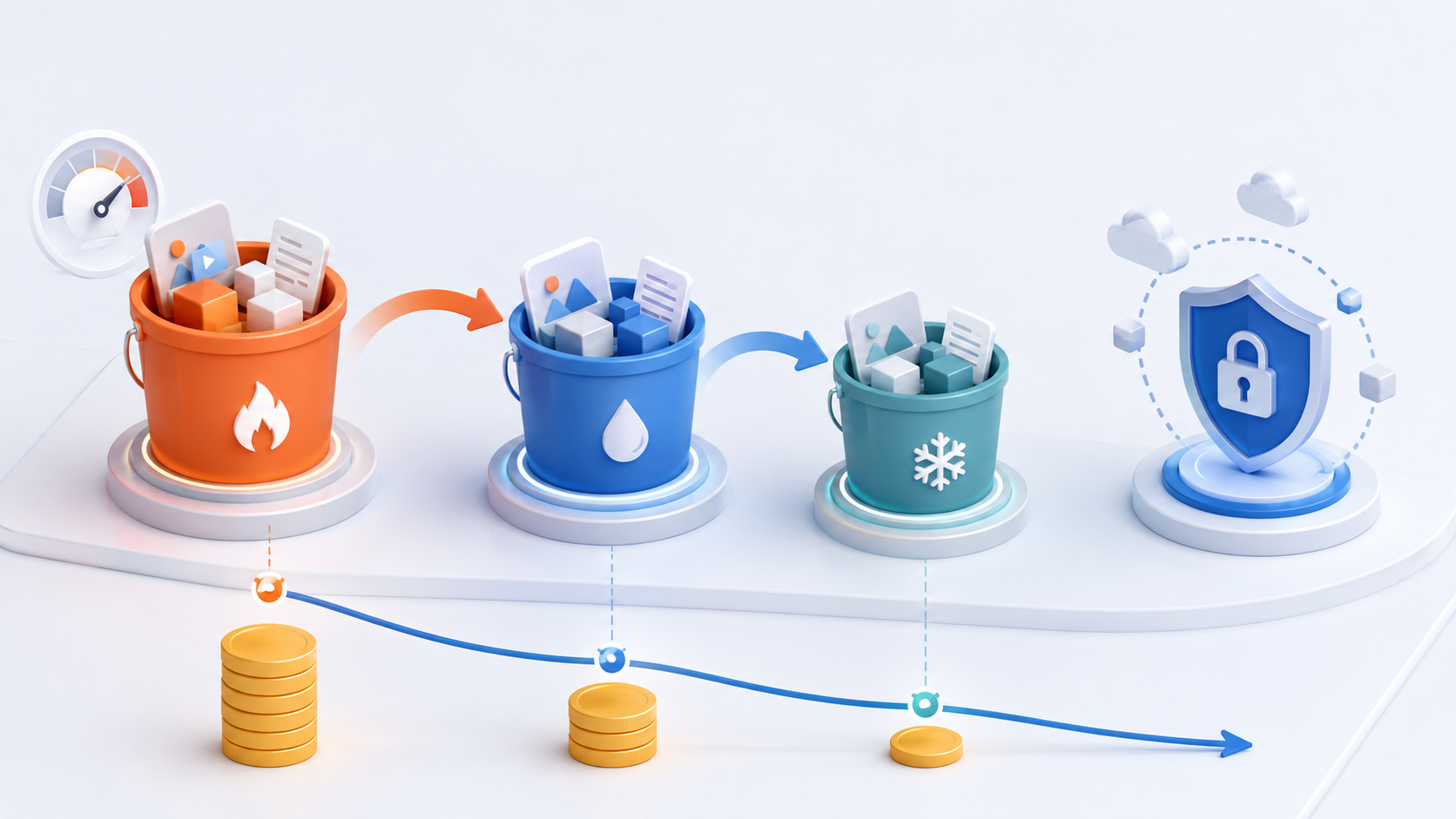
Mateo GarciaEditor

Mateo GarciaEditor
Greetings, dear readers. When the conversation turns to data storage in Europe, the tone tends to become tense rather quickly. Some confidently say, “Keep everything in the EU and you will have no problems.” Others turn the topic into a full-blown legal maze where, without three consultants, five contracts, and a mild sense of panic, it seems safer not to touch anything at all.
The reality is that everyday business is usually more complicated than either extreme. Companies do not simply need to “store data somewhere.” They need to launch products, choose cloud regions, onboard contractors, design redundancy, think through team access, and avoid turning their infrastructure into a museum of excessive caution. At the same time, a poor choice can create problems down the line: at first, the decision may seem practical and reasonable, but later questions begin to surface that the team never properly addressed in advance.
This is where the GDPR — the General Data Protection Regulation — comes in. Put simply, it establishes the rules for handling personal data: how it may be collected, where and on what legal basis it may be processed, to whom it may be transferred, and how it must be protected. That is why, when choosing a region for data storage, it is not helpful to swing between fear of regulation and the naive assumption that everything can be solved by ticking a single checkbox in a cloud dashboard. What matters far more is taking a calm, practical look at how GDPR requirements intersect with real infrastructure, access management, backups, and external services. That is exactly where we will begin.
Once the basic context is clear, the next practical question emerges: what exactly should a company assess before choosing a data storage region? It all begins with the nature of the data itself and its sensitivity from the standpoint of business impact, access, and the consequences of a potential mistake.
The problem is that businesses often look at data too broadly. Everything gets thrown into a single basket labeled “user information,” even though that basket may actually contain very different categories: contact details, order history, payment credentials, internal logs, employee records, location data, marketing profiles, or information from support systems. Formally, all of this may exist within the same infrastructure, but from a risk perspective, it is far from being the same type of asset.
That is precisely why region selection should not be based on the logic of “let’s put everything in one data center and call it done.” The more sensitive the data and the higher the cost of an error, the more carefully a company needs to consider where that data is stored, how it is backed up, and whether it may leave the required jurisdiction through adjacent services.
For example, a product catalog and anonymized analytics are one thing. A customer database containing shipping addresses, phone numbers, and purchase history is quite another. Employee records, payment data, or information that allows a company to build a deeper picture of a specific individual’s behavior require an even more careful approach. The point is not to make the architecture artificially complex, but to avoid applying the same storage model to data sets that carry very different levels of risk.

Let us say your 12 oz. Mouse-inspired accessories store is already operating in Europe. Customers are placing orders, buying keychains, mugs, and socks, leaving their delivery addresses, phone numbers, and email addresses behind, while your team looks at the cloud dashboard with satisfaction and thinks, “That’s it — our region is European, we can relax.” And that is exactly where the topic starts to become more interesting.
The problem is that the real risk does not arise only when you choose a point on the map for storing data. It begins the moment the data moves further: to contractors, support systems, external analytics services, a CRM platform, or a team working from another country. In other words, it is not enough to say, “Our primary region is in Europe.” You also need to understand whether the entire chain remains within the EU/EEA or extends beyond it.
Most often, data leaves the “neatly drawn architecture from the presentation deck” through several common points:
This is exactly where the difference appears between the appealing phrase “the data is stored in Europe” and the actual reality of data processing. Formally, the database may sit in a European data center, but if support personnel in a third country can access it, if backups are sent to another region, or if an external service pulls part of the data, then the issue is no longer purely “European.”
This is a particularly tricky point for businesses because, from the outside, everything may look perfectly respectable. The store is selling products, the website is fast, orders are flowing, and the customer experience is smooth. But behind the scenes, customer data may be traveling more actively than the 12 oz. Mouse figurines themselves: first into a European database, then into an overseas CRM, then into a global support platform, and then into a backup stored somewhere you never expected.
That is why the true boundary of risk is not where the primary data center is marked on the diagram. It is where the controlled perimeter ends and external transfers, outside access, and dependence on another jurisdiction begin. The more third parties involved in that chain, the more carefully you need to evaluate not only the region itself, but the full path your data takes.
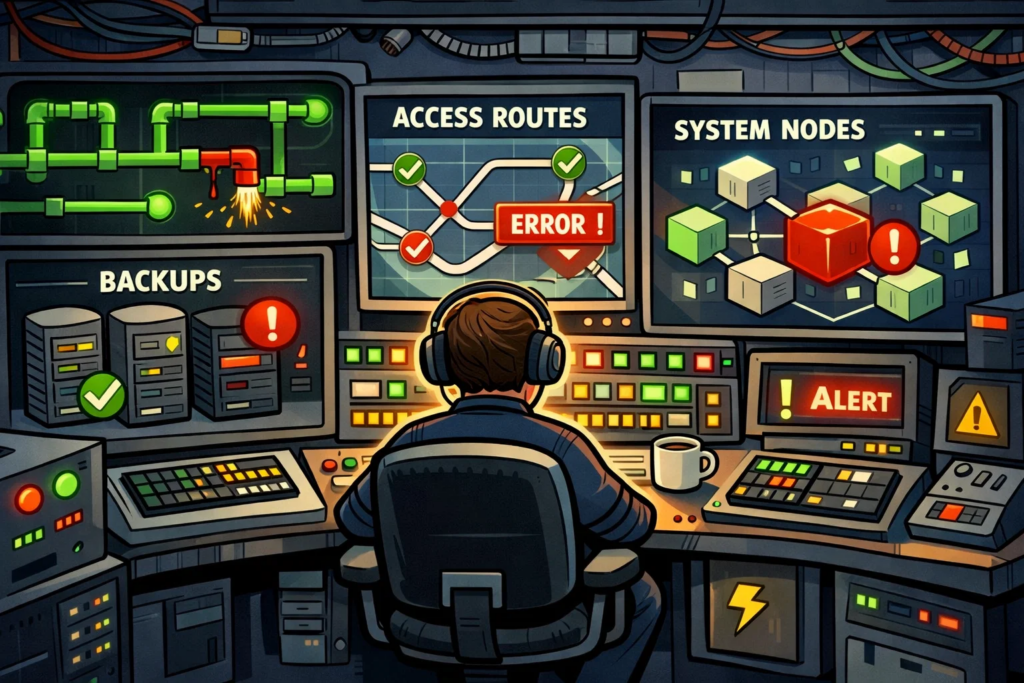
After all the legal and infrastructure-heavy discussion, it is only natural to ask a simple, practical question: what should you actually look at when choosing a region? Not in theory, not in a polished vendor presentation, and not in the spirit of “Frankfurt sounds solid enough,” but in real-world operations.
The problem is that companies can easily reduce this decision to a single criterion. Some focus only on latency, others only on whether the region is formally “European,” and others only on cost. In reality, however, a region has to be evaluated across several dimensions at once, because the option that looks best for performance is not always the best for access control, and the option that looks ideal from a compliance standpoint is not always convenient for backup design or operational support.
This can be reduced to a few core criteria:
| Criterion | What to look at in practice | Why it matters |
| Latency | Where users, applications, and internal teams are located | Region choice affects service performance and the overall user experience |
| Access | Who exactly will be able to view the data: employees, support staff, contractors, or the provider | What matters is not only where the data is stored, but the actual access path to the information |
| Backups | Where backup copies are stored and whether they are moved to another region by default | “Our primary region is in the EU” means little if the backups follow a completely different logic |
| Control | Who manages encryption keys, access policies, logs, and data transfer settings | A region alone does not provide sufficient governance |
| Auditability | Whether you can quickly show where the data is located, who accessed it, and which services it passed through | This matters both for internal review and for conversations with auditors or customers |
Latency does matter. If your product operates in Southern Europe while the main infrastructure is placed too far away, that can hurt both speed and user experience. But the choice does not end with milliseconds alone. It is just as important to understand who will be working with the data and from where. Even if the database is hosted in a European region, the architecture becomes more complicated if administrators, support teams, or contractors from other countries connect to it on a regular basis.




Backups and disaster recovery deserve separate attention. The primary system may reside in an appropriate region, but backup copies, snapshots, and disaster recovery environments are often configured according to a different logic. As a result, everything may look local on the architecture diagram, while part of the infrastructure has already drifted beyond the original design intent.
Then come control and verifiability. A “correct” region does not accomplish much on its own if it is unclear who manages the encryption keys, who changes access policies, where the logs are stored, and whether access can be restricted for internal teams, contractors, and even the provider itself. At some point, all of this will have to be explained to the security team, a customer, or an auditor.
In practice, a good region choice usually answers five questions:
There is no single universal answer that fits every company. The same region may work very well for one product and poorly for another. In practice, the best choice is not the most popular one, but the one that can withstand the actual workload, the data protection requirements, and the uncomfortable questions that inevitably come up during a review.

Let us say you are almost at the finish line. The store has already selected a European region, the team is satisfied, the cloud dashboard looks reassuringly professional, and someone inside the business is already mentally celebrating: “That’s it — now we’ve done everything right.” And that is exactly the moment when it is better not to open the champagne, but to open a checklist instead. Because the most unpleasant questions usually do not appear when the region is being selected. They appear at launch, when it turns out that part of the protection model rests on assumptions, while part of the agreements exists only in someone’s head.
From the outside, everything may look tidy: the data is stored in Europe, the service is running, and latency looks fine. But if encryption keys are controlled by unclear parties, permissions have been granted too generously, the provider relies on sub-processors without sufficient transparency, and the contracts are written in the style of “it’s just our standard template, don’t worry,” then the whole elegant setup quickly stops looking so reassuring. A region alone does not solve anything if it is not supported by sound technical and organizational safeguards.
This can be reduced to a few basic checks:
| What to check | What to look at | Why it matters |
| Encryption | Where the data is encrypted, how it is protected at rest and in transit, and who controls the keys | The same region can provide very different levels of control depending on the encryption model |
| Contracts | Whether there is a DPA, and what it says about processing, responsibility, notifications, and data deletion | Without a clear contractual framework, a “European region” does not make the relationship with the provider transparent |
| Sub-processors | Who exactly is involved in processing the data beyond the primary provider | The real processing chain is often much broader than the service’s marketing description suggests |
| Access rights | Which employees, contractors, and support staff can actually view the data | The mistake often arises not at the region level, but at the level of overly broad access |
Encryption here is not just a box labeled “enabled.” It is a question of control. You may keep data in a European region, but if the keys are managed under a model the team does not fully understand, confidence in that setup is already weaker. The better question is not “Is anything encrypted at all?” but rather, “Who actually controls the keys, where do they reside, and can access to them be restricted?”
Contracts are even more straightforward. Many companies reach the launch stage and only then start reading the DPA as if it were a flat-pack furniture manual that suddenly landed on their desk without pictures. Yet that is exactly where the important issues live: who is considered the processor, how the processing is described, how the provider notifies customers about changes, what happens when data must be deleted, and how onward transfers are documented.
Sub-processors deserve separate attention. Very often, the architecture looks on paper like “us plus the cloud provider,” while in reality the environment already includes support services, analytics platforms, logging tools, backup systems, and several other participants the team remembers only when an auditor asks an uncomfortable question. That is why it is important to review not only the primary vendor, but the entire chain of parties that may take part in the processing.
And then there are access rights. Sometimes the most vulnerable part of the entire setup is not the data center, not the jurisdiction, and not the backup design, but ordinary human enthusiasm along the lines of, “Let’s just give everyone access for now and sort it out later.” If customer data from your 12 oz. Mouse store — mugs, stickers, keychains, and all — can be viewed by anyone for whom it is merely “convenient,” then the problem is no longer the region. It is your access governance culture.

We have now looked at how to choose a data storage region in Europe in a way that makes sense not only on an architecture diagram, but in real operations as well. It quickly becomes clear that this topic is far broader than the simple question of “which country should we check in the dropdown.” In practice, everything comes down to the type of data involved, the path it takes, access by internal teams and contractors, backup design, contractual safeguards, and how confidently the company understands its own infrastructure in the first place.
That is why a sound region choice does not begin with the attractive name of a European data center. It begins with a sober review of the entire processing chain. Where is the data stored? Who can see it? Where can it be transferred? Where do the backups reside? Who is involved in processing besides the primary provider? And can you explain all of this calmly and clearly during an audit?
If reduced to one simple idea, GDPR in this context is not about “keep everything nearby and hope for the best.” It is about clarity, control, and predictability. And that means a good region choice is not just a legal formality, but part of sound architectural maturity.
Thank you for reading!