Mateo GarciaEditor

Mateo GarciaEditor
For a game studio, the word edge often sounds like something that belongs in the category of “more expensive, more complicated, more fashionable.” But once you strip away the marketing layer, the idea is actually quite practical: bring the parts of the infrastructure closer to the player when latency genuinely affects the experience.
And this is not an abstraction. Games have long relied on remote servers of many different kinds — from VPS instances and community-hosted servers to dedicated game servers and specialized platforms. But the key point is something else: not every part of a game is equally sensitive to the distance between the player and the server.
If we are talking about turn-based mechanics, asynchronous meta systems, or an in-game store, latency is experienced very differently than it is in a PvP shooter, a co-op survival session, or real-time matchmaking. In other words, the problem is usually not that “the whole game is lagging,” but that certain components react especially badly to extra milliseconds.
That is exactly why an edge VPS should not be seen as a magical accelerator for the entire project. Its purpose is not to make everything faster across the board, but to shorten the path to the components for which distance is genuinely critical: the game server, matchmaking, the lobby, chat, presence, or the session logic surrounding the match. At the same time, other parts of the system may remain centralized without causing any real problems.
That naturally leads to the main practical question: which elements of the infrastructure are actually worth moving closer to the player, and which are better left untouched unless there is a clear reason to change them?
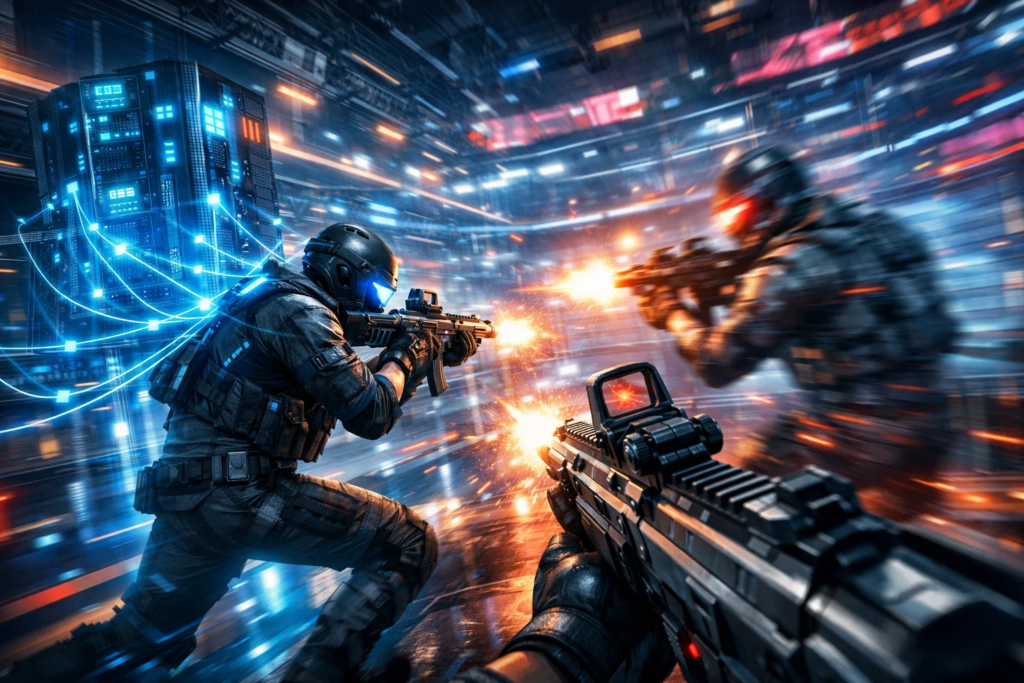
To put it plainly, edge works best where the path between the player and the server needs to be short, fast, and predictable. Not everywhere across the board, but specifically in the parts of a game where latency is felt almost physically.
The easiest way to see this is in a shooter like Valorant. If the match is hosted too far from the player, the extra latency immediately hits the most painful part of the experience: shooting, reaction time, hit registration, and the overall sense that the fight is fair. That is why edge is especially valuable where the match itself lives: the server needs to receive player actions as quickly as possible and return the result just as fast.
The next layer is matchmaking and lobby logic. The player has not entered the match yet, but is already feeling how responsive the game is. If queueing, joining the lobby, updating the team roster, and launching the session all happen with noticeable delay, frustration starts before the first round even begins.
Then come the stateful services surrounding the live session: presence, room state, temporary in-game objects, and coordination between participants. If all of that has to travel back and forth to a central region all the time, the game starts to feel heavier than it should.
In co-op survival games like Valheim, edge becomes useful for a different reason: the group needs to spin up a session quickly, maintain a stable shared world state, and avoid the feeling that the world is “lagging behind” the players themselves. The latency here is not felt in the same way as in a shooter, but it still erodes comfort very quickly.
Put simply, the things that are usually worth moving closer to the player are the ones that:
That is exactly why edge tends to make the most sense in games where live interaction matters more than background processing: competitive matches, co-op sessions, and the services that surround them.
This is exactly where studios most often fall into a trap. As soon as it becomes clear that edge can reduce latency, the temptation is to draw an overly simple conclusion: if it helps, then everything related to the game should be moved there. In practice, that approach almost always creates more complexity than value.
Not every service benefits from geographic proximity as clearly as the match itself or latency-sensitive session logic. For many components, what matters more than minimal delay is data integrity, consistent rules of operation, ease of support, and predictable governance.
As a rule, the following are not good candidates for edge placement:



The reason is simple: for these systems, stability and manageability matter more than proximity to the player. A player is unlikely to notice a few extra tens of milliseconds when opening a profile, but the studio will quickly notice the consequences if critical data becomes unnecessarily fragmented across regions.
That is why a mature edge design almost never looks like “move everything closer to the player.” In most cases, it is a much more precise division of responsibilities: latency-sensitive components are brought closer, while the parts that must remain unified, reliable, and easy to manage stay in a centralized layer.
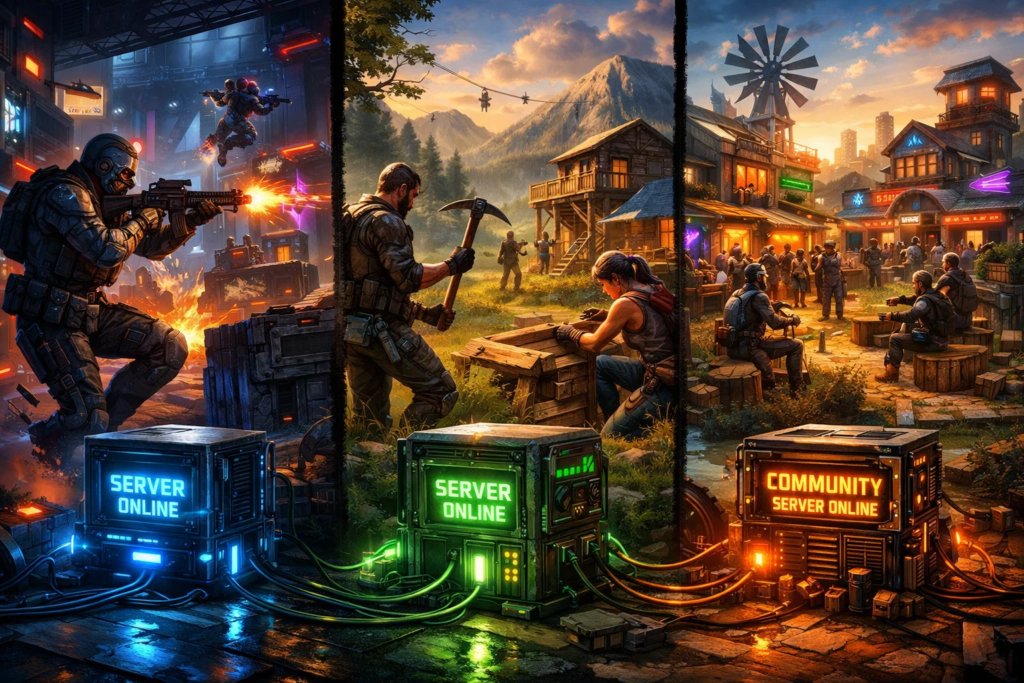
In practice, an edge VPS is not valuable on its own, but in very specific gaming scenarios. This becomes much clearer when you look not at abstract “game infrastructure,” but at three different types of games.
A competitive game with a latency-sensitive match.
Take a shooter in the spirit of Apex Legends. Edge is especially useful where players are highly sensitive to the distance from the server: during the match itself, in server allocation, and in the logic of session entry. In this kind of setup, an edge VPS is not there to host the entire game, but to shorten the path to the live part of the match and avoid making every firefight dependent on a region that is simply too far away.
A co-op survival game with a dedicated session.
A good example here is Enshrouded. For this type of game, an edge VPS makes particular sense when a group of players needs to spin up a session quickly somewhere closer to them, maintain a stable shared world state, and avoid forcing the entire co-op experience to live in one distant central region. In this case, edge helps not for the sake of “esports-grade precision,” but for the sake of a smoother and more responsive shared session.
A community- or server-driven game with a persistent world.
Palworld is a useful example here. In this kind of model, an edge VPS can be valuable not only for raw latency, but also because it allows the world to live closer to a specific cluster of players, come online faster, and avoid unnecessary network distance. This becomes especially important when the game is not built around a single short match, but around a persistent world that players return to again and again.
These three scenarios highlight the main point: an edge VPS is most useful where the game depends on a live session, sensitivity to latency, and the regional proximity of players. But the actual benefit looks different in each case. For a shooter, it is about fairness and responsiveness in combat. For a co-op survival game, it is about the smoothness of the shared session. For a community-server model, it is about practical world placement and a clear, intuitive geography for players.

When a studio reaches the point of discussing an edge architecture, the practical question becomes: how do you know whether it is actually needed and will not create more problems than value? The answer usually lies not in a beautiful regional map or in the feeling that “this is more modern,” but in validating a few things before launch.
Before rollout, it is worth checking five areas:
That kind of validation is usually what separates a working edge design from a situation where the studio has simply added a new layer of complexity without delivering any meaningful improvement for players.
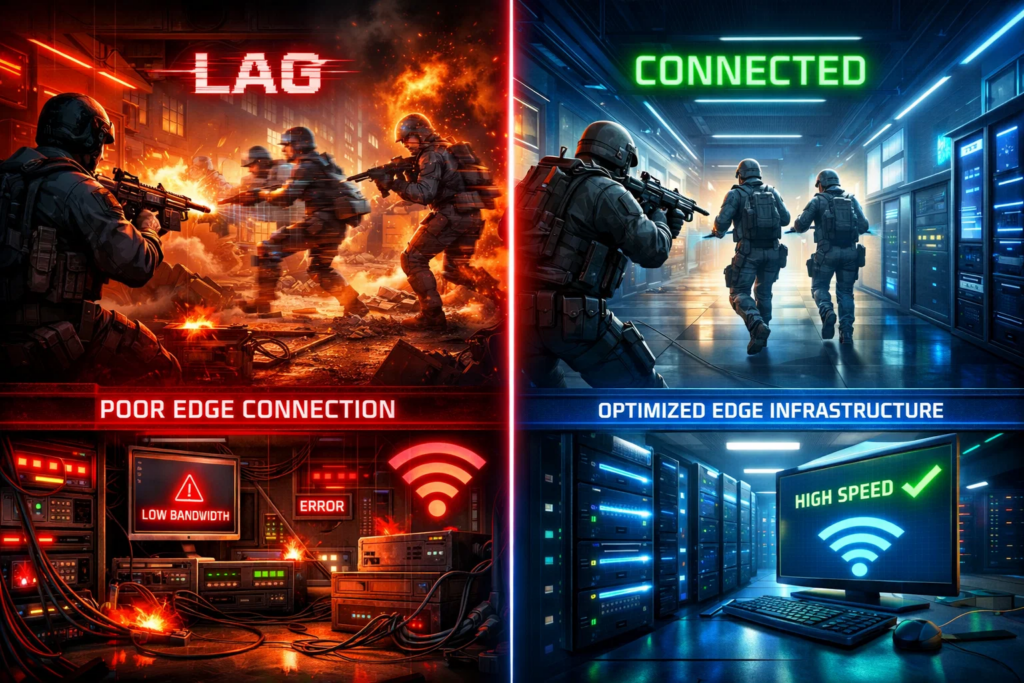
The value of an edge architecture is not determined by how elegant it looks on an infrastructure diagram, but by whether it improves the real gameplay scenario it was meant to improve. The first thing to check is whether the specific moment that justified the whole effort has actually become better: the match should start faster, the lobby should feel more responsive, matchmaking should feel more stable, and the session logic should behave more predictably.
The next thing to evaluate is stability. A good result is not just lower latency, but more consistent game behavior overall: less variation in response times, less jitter, and fewer player complaints about network performance.
The cost of that improvement matters just as much. If a relatively small gain forces the studio to deal with significantly more complex support, extra release overhead, heavier synchronization, and a growing number of potential incidents, then edge may simply become too expensive to operate. The same goes for the infrastructure itself: regional deployment almost always means additional nodes, a more complex network, and higher operational costs.
In the end, the criterion is fairly simple: an edge architecture pays off when the improvement is clearly visible in how the game behaves and is not canceled out by the added complexity. If the gain is marginal while operational cost keeps rising, the studio is usually better off simplifying the system first rather than expanding its geography.

An edge VPS is not a magic button that simply “makes the game faster,” but a targeted tool for situations where latency is genuinely breaking the player experience. It works best where fast and stable behavior matters for the match, the lobby, matchmaking, the session itself, or any other response-sensitive logic that needs to stay close to the player.
The main takeaway is simple: first identify the specific pain point, and only then choose the technology. If players are truly suffering from the distance to the server, and the relevant layer can be moved closer without creating architectural chaos, an edge VPS can deliver a noticeable improvement. But if the problem runs deeper — in the logic itself, synchronization, or the way the system is designed — then it is better to fix the foundation first and only then make the geography more complex.
Thank you for reading!