Mateo GarciaEditor

Mateo GarciaEditor
Many people remember the old taxi-meter logic: while the ride is in progress, the meter keeps running, and the final price depends not only on the route, but also on traffic, waiting time, and everything else that happens along the way. Serverless works in a similar way: formally, you pay based on actual usage, but the final bill is not always as predictable as it looks at first.
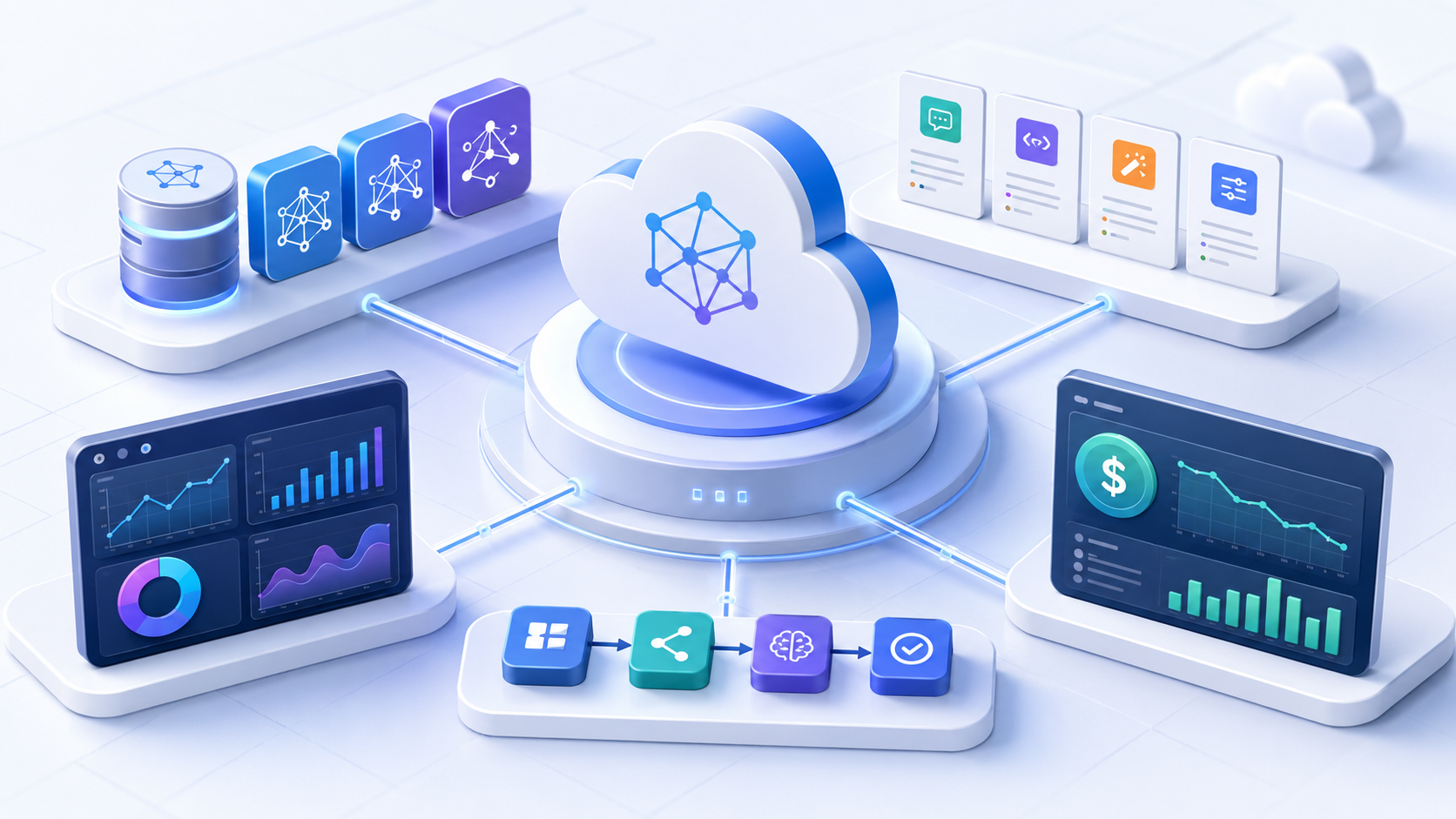
Serverless is a model in which an application relies on managed cloud services and event-driven functions, so the team does not need to manually run and maintain always-on servers for every task. In other words, you are not really working with a server as such — you are working with execution logic: an event happens, the code runs, the platform allocates resources, and then releases them.
At the start, this model looks almost ideal: no need to keep spare capacity running, no paying for idle time, and no need to guess infrastructure size in advance. But “pay for what you use” does not mean automatically low or fully predictable costs. It only means that the bill is directly tied to real system activity.
In practice, costs grow from several sources at once:
That is exactly why serverless is easy to underestimate if you look only at the price of a single function. In reality, one user request may pass through an API Gateway, trigger a function, query a database, write logs, publish an event to a queue, and launch another processing step. The bill is not built from one operation, but from the entire chain.
While traffic is moderate, this architecture often feels lightweight and cost-efficient. But as invocation counts grow, execution time increases, memory rises, and more dependent services join the path, costs start increasing in several places at once. So yes, serverless helps you avoid paying for idle capacity and removes part of the infrastructure overhead — but it also makes costs far more sensitive to architecture, event patterns, and the quality of your observability.

If we continue the taxi analogy, invocations are not the distance or the time — they are the number of rides themselves. You can take one long trip, or dozens of short ones and end up spending just as much. Serverless follows the same logic: even if a single function run is cheap, the total bill grows when the number of executions becomes too high.
That is why cost optimization should focus not only on the price of one execution, but also on how frequently functions are triggered. This becomes especially visible in architectures where a single user action kicks off an entire event chain: a request hits the API, triggers a function, that function writes to a queue, the queue triggers another function, and then yet another handler runs for logging, notifications, or synchronization. For the user, it looks like one action. For the bill, it looks like several chargeable executions.
Invocation counts do not grow only because traffic increases. They are often inflated by unnecessary triggers, overly noisy events, poor function decomposition, and designs where one useful business action causes too many auxiliary executions. That is why it helps to ask a very direct question: how many invocations are generated by a single business action? If the chain is too long, the problem is no longer just platform pricing — it is the architecture itself.
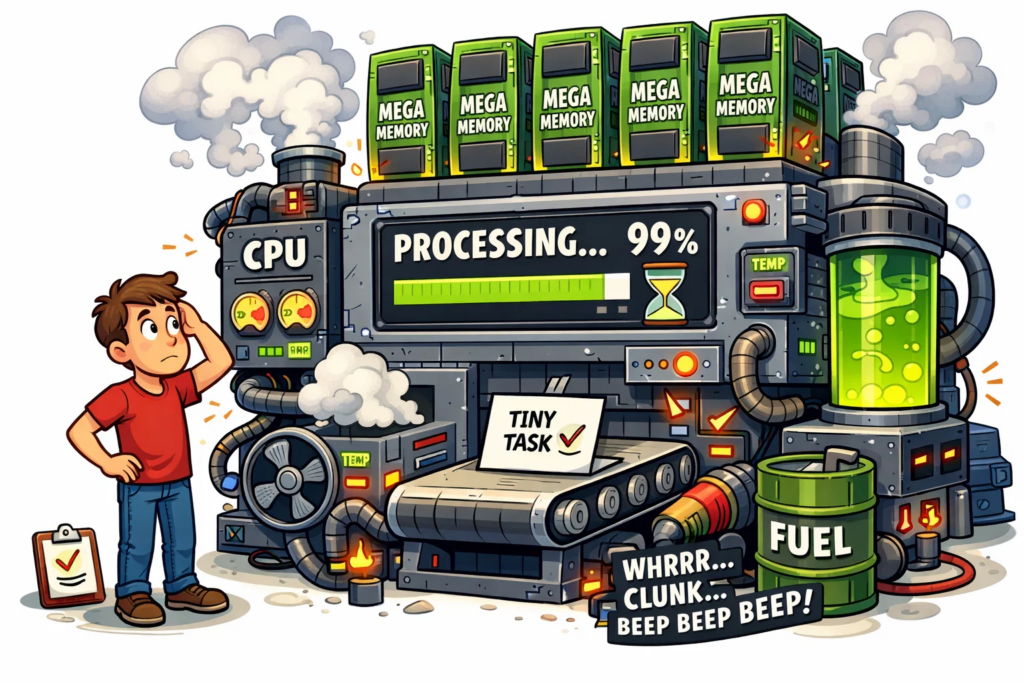
After invocation count, other parameters start to matter: how long each execution lasts and how many resources it receives. Even if the number of invocations is moderate, the total bill can still grow when functions run for too long or are allocated more memory than they actually need.
This is especially important in serverless because cost depends not only on the fact that a function was invoked, but also on execution time and allocated memory. In other words, the platform doesn’t just charge for “a run” — it also charges for how heavy that run turned out to be.




The logic of duration is relatively straightforward: the longer a function runs, the higher the cost. But in practice, runtime often accumulates through small inefficiencies: poorly optimized database queries, unnecessary calls to external APIs, heavy serialization, too much logic packed into one function, or inefficient handling of queues and retries. In a test environment this may look acceptable, but in production it can become a steady source of avoidable spend.
Memory is trickier. Teams often over-allocate it with the familiar logic of “better too much than not enough.” That makes sense from a reliability point of view, but it becomes a budget issue very quickly: the more memory a function is assigned, the more expensive each execution becomes. This is especially visible in high-invocation scenarios, where even a small amount of overprovisioning multiplies into a noticeable cost.
That’s why optimization should check two things at the same time:
A good approach is not to size these settings “by feel,” but to test them against real workloads. If a function consistently fits into a smaller memory profile without losing performance, the extra spend is unnecessary. And if it still runs too long under a reasonable configuration, the root cause is more likely in the logic itself, in dependencies, or in the call architecture.
That is exactly why duration and memory should be considered together: one shows how long the function stays active, the other shows how expensive that active time becomes. Combined, they often affect the bill much more than teams expect at the beginning.
But even invocations, duration, and memory are not the whole bill. In serverless, a function rarely lives in isolation: one execution may pass through an API Gateway, query a database, write logs, publish a message to a queue, store a file in object storage, or trigger the next processing step. From the product’s perspective, this looks like one coherent scenario. From the cloud bill’s perspective, it is several separate cost sources.
That is exactly why serverless can look inexpensive at the level of a single function but unexpectedly costly at the level of the full workflow. The team sees an acceptable execution price, but misses the fact that database requests, queue operations, logging, storage, and network interactions between services are all being charged alongside it. The function stops being the main cost driver and becomes the entry point into a much longer chain.
This becomes especially visible in architectures where one event triggers several dependent processes without explicit cost control. For example, a file upload may trigger metadata extraction, a database write, preview generation, a notification, logging, and synchronization with another service. For the user, that is one action. For the cloud platform, it is already a bundle of billable operations.
That is why optimization has to look beyond the function itself and measure the cost of the entire chain. If execution becomes a bit cheaper, but logging, database requests, or queue events keep growing unchecked next to it, the savings will be mostly cosmetic.
A strong sign of a mature approach is when the team can estimate not only the cost of a single invocation, but the full cost of a business action — for example, one file upload, one user registration, one order, or one image-processing workflow.

Once you understand what drives a serverless bill, the next logical question is: what do you actually do about it? In practice, optimization is rarely one “magic button.” The biggest gains usually appear when a team improves things at several levels at once: inside functions, in event logic, and in the architecture as a whole.
You can think of it like this:
| Level | What to optimize | What it gives you |
| Function | Reduce execution time, size memory more accurately, remove unnecessary logic from a single invocation | Each individual invocation becomes cheaper |
| Events | Filter unnecessary triggers, reduce event “noise,” avoid launching processing where it is not needed | Total invocation count and background operations go down |
| Architecture | Remove unnecessary intermediate steps, rethink decomposition, calculate the cost of the full chain rather than one function | Fewer services and handoffs are involved in a single business action |
At the function level, teams typically reduce unnecessary computation, cut avoidable calls to external services, remove heavy dependencies, and size memory closer to real runtime needs. The logic here is simple: the less waste inside one execution, the cheaper each execution becomes.
At the event level, the goal is different: trigger only what actually needs to run. If the system reacts to too many secondary signals, duplicates handlers, or spawns unnecessary background work, the bill starts rising even under normal traffic. That is why a noticeable part of cost reduction often comes from cutting unnecessary triggers rather than just tuning code.
Architectural optimization requires looking at the full request path: how many steps it takes, how many services it touches, and where queues, intermediate writes, extra calls, and additional logging appear. Very often, the problem is not one expensive function, but the fact that a simple user action has grown into an overly long and costly chain.
A useful analogy is buying yogurt. Each individual cup is cheap, and one extra purchase doesn’t matter much. But if every time you buy a little more than you really need, never check what is already in the fridge, and keep buying “just in case,” the excess starts to pile up. Some gets consumed quickly, some sits around, and some eventually gets thrown away. Each purchase looks harmless on its own, but together the spend increases not because of real need, but because of weak control.
That is exactly the FinOps mindset: not to suppress spending at any cost, but to make it understandable, governed, and proportional to the workload. In serverless, savings don’t come from rejecting the model — they come from consciously removing unnecessary operations and stopping the habit of designing everything “with extra headroom just in case.”
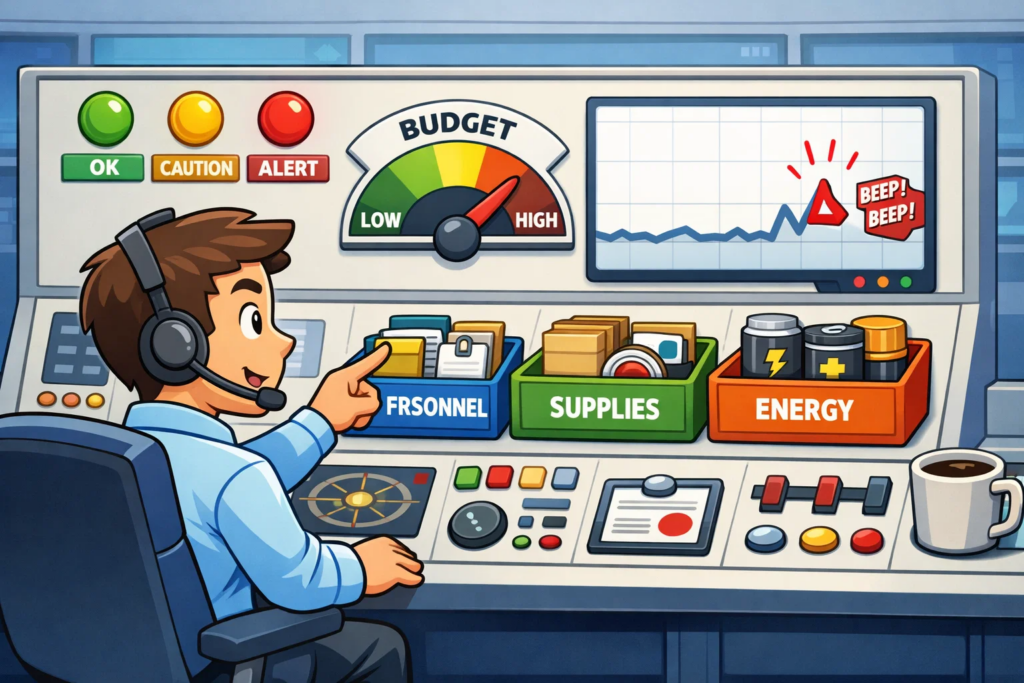
Even if you have already made the architecture cleaner, optimization alone is not enough. A month later, the bill can start climbing again if the team cannot see where new costs are appearing. That is why the next step is not only to remove waste, but also to build proper cost observability.
You can think of it like this:
| Tool | Why it matters | What it gives you in practice |
| Alerts | Signal sharp deviations and unexpected cost spikes | The team learns about the issue before the bill turns into an unpleasant surprise |
| Budgets | Set financial boundaries for a service, project, or team | Costs stop being abstract and start being measured against clear limits |
| Tags | Break down spend by service, environment, product, and owner | It becomes clear who and what is actually generating the bill |
| Unit economics | Show the cost of one useful action: an order, request, upload, or processing step | The team starts looking not only at the total bill, but at the price of a specific business scenario |
Alerts help detect anomalies earlier: a sudden increase in invocations, logging volume, or resource consumption in a particular scenario. Budgets create boundaries and make cost discussions more concrete: is the service or team still within a normal range, or is it already moving beyond it? Tags add structure and let you break spending down by environment, product, team, or service. And unit economics ties technical cost back to business actions, showing how much one registration, one file upload, one order, or one user request actually costs.
This is especially important in serverless, because without proper cost visibility, the bill will eventually start drifting upward again anyway — through new scenarios, growing traffic, unnecessary events, or more expensive execution chains. That is why observability is not just an add-on, but a way to preserve the gains from optimization over time. In this model, costs stop being surprises and become a governed part of the architecture.
Serverless is often seen as a model where you pay only for actual usage and therefore automatically avoid unnecessary spending. In practice, though, the bill rarely grows because of one expensive function. Much more often, it is inflated by a chain of small things: unnecessary invocations, oversized memory allocation, noisy events, dependent services, and poor cost visibility.
That is why serverless optimization is not about aggressive cost-cutting at any price. It is about building a clearer architecture and maintaining proper cost control. When a team understands which scenarios are actually necessary, what the total cost is made of, and where deviations begin, the cloud bill stops being a surprise and becomes a clear price for useful work performed by the system.